
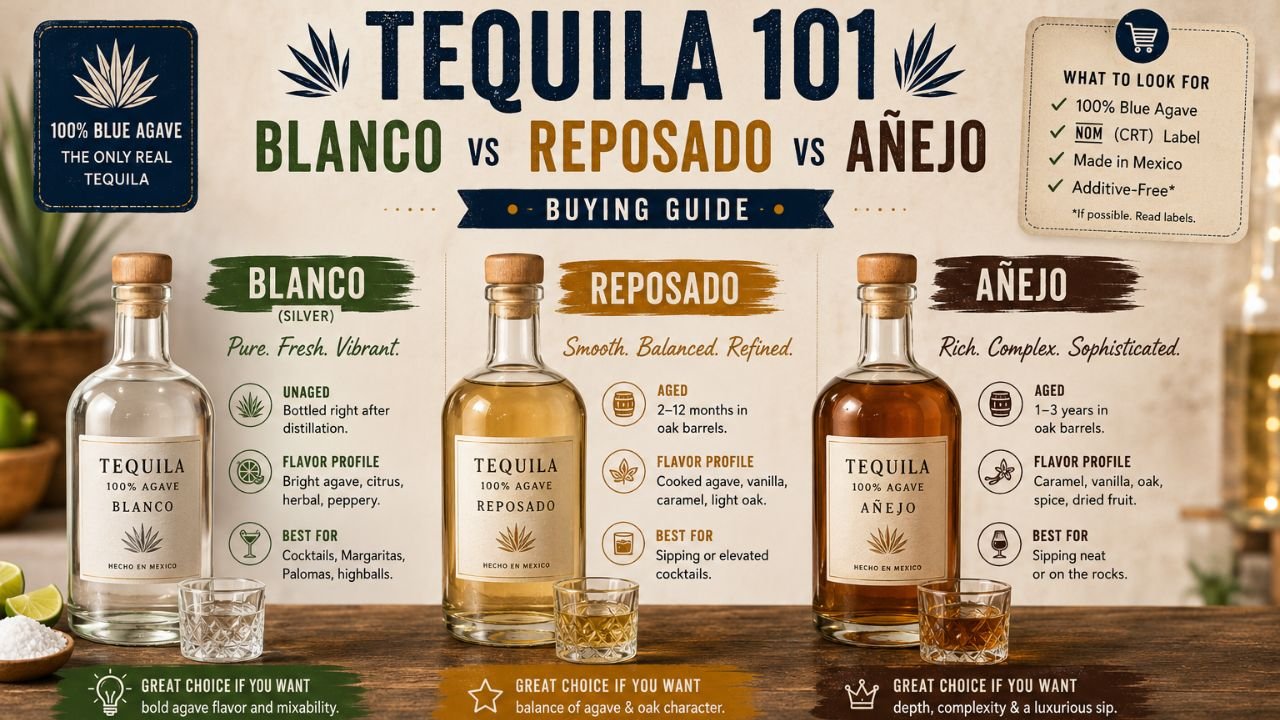
If you’ve ever stood in front of a tequila shelf and wondered what the difference is between Blanco, Reposado, and Añejo tequila, you’re definitely not alone.
The bottles can look almost identical, the labels are full of Spanish words, and the price difference can be surprisingly large. Then there’s the bigger question: Which tequila should you actually buy?
The short answer is that it depends on how you plan to drink it.
Blanco tequila is bright, fresh, and usually the best choice for margaritas and other cocktails. Reposado tequila spends time ageing in oak, giving it a smoother, slightly richer character. Añejo tequila is aged longer and tends to be more complex, mellow, and better suited to sipping.
But there’s a little more to it than that.
I’ve found that tequila makes much more sense once you stop thinking of these styles as “cheap, medium, and expensive” and start thinking about them as different drinking experiences. Here’s how I’d choose between them.
First, What Is Tequila?
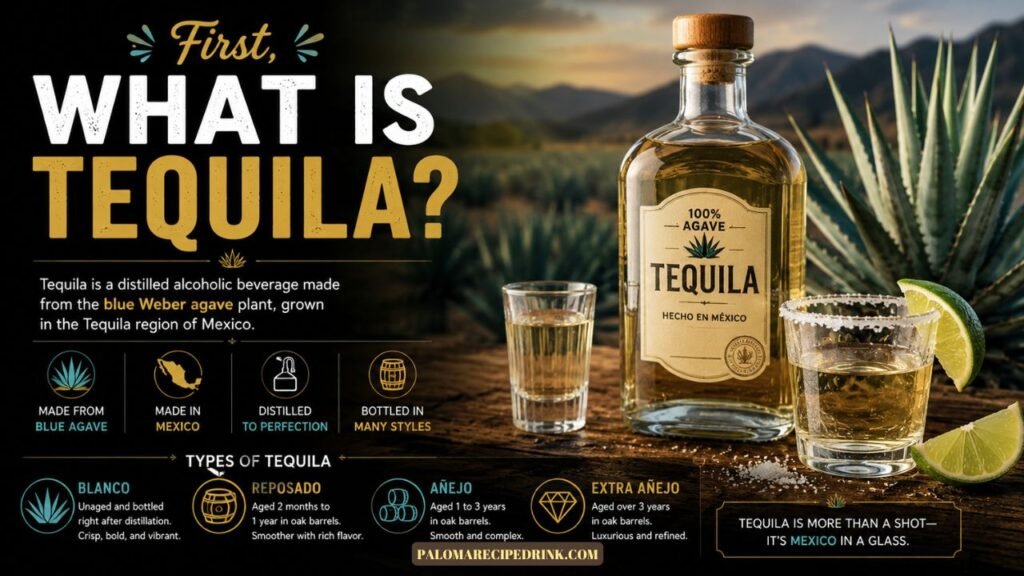
Tequila is a Mexican spirit made from blue Weber agave, primarily in the Mexican state of Jalisco and certain surrounding areas permitted under Mexico’s tequila regulations.
The agave is harvested, cooked, fermented, and distilled before becoming tequila. What happens afterward — particularly whether and how long the spirit is aged — is what creates much of the difference between Blanco, Reposado, and Añejo.
And that aging matters.
Oak can add notes such as vanilla, caramel, baking spice, toasted wood, and dried fruit. But more aging doesn’t automatically mean a better tequila. It simply creates a different style.
That’s one of the most useful things to understand before buying your next bottle.
Blanco vs. Reposado vs. Añejo Tequila
Here’s the quick version:
| Tequila Type | Aging | Flavor Profile | Best For |
|---|---|---|---|
| Blanco | Generally unaged or minimally rested | Fresh agave, citrus, pepper, herbs | Margaritas, Palomas, cocktails, shots |
| Reposado | Aged in oak for at least 2 months | Agave + vanilla, oak, spice | Cocktails, sipping, mixed drinks |
| Añejo | Aged in oak for at least 1 year | Rich, smooth, caramel, oak, dried fruit | Sipping neat or over ice |
If you only remember one thing, remember this:
Blanco = fresh and lively.
Reposado = balanced and rounded.
Añejo = rich and complex.
Now let’s get into what that actually means when you’re drinking them.
1. Blanco Tequila: Bright, Fresh and Great for Cocktails
Blanco, sometimes called Plata or Silver tequila, is generally the most direct expression of the agave.
It doesn’t have the same extended oak aging that you’ll find in Reposado or Añejo tequila. Because of that, the flavors tend to be sharper and more recognizable.
Depending on the bottle, you may notice cooked agave, citrus, black pepper, fresh herbs, earthiness, or a slightly vegetal character.
This is usually where I’d start if someone tells me they want tequila for cocktails.
Best uses for Blanco tequila
- Classic Margarita
- Paloma
- Ranch Water
- Tequila Sunrise
- Tequila soda
- Fresh tequila cocktails
Blanco works particularly well when you want the tequila to remain noticeable without overwhelming the other ingredients.
My favorite simple use: a classic Margarita
For a straightforward Margarita, try:
Ingredients
- 2 oz Blanco tequila
- 1 oz fresh lime juice
- ¾ oz orange liqueur
- ¼–½ oz agave syrup, depending on how sweet you like it
- Ice
- Lime wheel or wedge
- Salt for the rim, optional
Method
If you like a salted rim, run a lime wedge around half of the glass and dip it lightly into kosher or sea salt.
Add the tequila, lime juice, orange liqueur, agave syrup, and ice to a shaker. Shake hard for about 10–15 seconds, then strain over fresh ice.
The important part here is fresh lime juice. Bottled lime juice can work in a pinch, but fresh juice makes a noticeable difference.
A good Blanco tequila gives the Margarita a clean agave backbone rather than simply adding alcohol.
2. Reposado Tequila: The Best Middle Ground
Reposado means “rested”, and this is probably the tequila style I’d recommend to someone who wants one bottle that can do almost everything.
Reposado tequila is aged in oak for at least two months, but less than a year under the standard category definitions.
That relatively short period can make a surprisingly big difference.
The fresh agave notes are still there, but the oak contributes additional flavors such as vanilla, light caramel, toasted wood, baking spices, and sometimes dried fruit.
It’s smoother and rounder than many Blancos without becoming as rich as an Añejo.
Why I like Reposado for entertaining
If I’m putting together drinks for friends and don’t know exactly what everyone wants, Reposado is an easy choice.
Someone can use it in a Margarita.
Someone else can make a Paloma.
And if another guest wants to sip it slowly over ice, it doesn’t feel out of place.
That versatility is the reason I think Reposado is underrated.
Try a Reposado Paloma
Ingredients
- 2 oz Reposado tequila
- ½–1 oz fresh grapefruit juice
- ½ oz fresh lime juice
- ¼ oz agave syrup
- 2–3 oz grapefruit soda or sparkling water
- Ice
- Grapefruit or lime wedge
Add tequila, grapefruit juice, lime juice, and agave syrup to a highball glass filled with ice.
Give it a quick stir, top with grapefruit soda or sparkling water, and gently stir again.
The oak from the Reposado adds a little extra depth without taking away the refreshing grapefruit character.
It’s particularly good on a warm afternoon.
3. Añejo Tequila: When You Want to Slow Down
Añejo is where tequila starts to feel less like a cocktail ingredient and more like a sipping spirit.
Under the standard category definition, Añejo tequila is aged in oak for at least one year.
That additional time allows the spirit to develop a deeper flavor profile. Depending on the tequila, you might find notes of vanilla, caramel, toasted oak, cinnamon, dried fruit, roasted agave, chocolate, or nuts.
This is the style I’d choose when I want to sit down, pour a small glass, and actually pay attention to what’s in it.
How should you drink Añejo tequila?
My preference is simple:
Neat, at room temperature, in a small glass.
You don’t need to complicate it.
Pour an ounce or two, give it a few moments, then take a small sip. Let it sit on your palate before swallowing.
If the tequila is good, you should be able to pick up different layers as you drink it.
If neat tequila feels too intense, add a single large ice cube. Don’t feel like you’re doing something wrong — the goal is to enjoy it.
So Which Tequila Should You Buy?
This is the question that actually matters.
Buy Blanco if:
You mainly make cocktails, especially Margaritas and Palomas.
You enjoy bright, citrusy, peppery flavors and want the agave character to stand out.
My pick for: cocktail lovers.
Buy Reposado if:
You want one bottle that can work for cocktails and sipping.
You prefer a smoother spirit with some oak and vanilla character but still want noticeable agave.
My pick for: the one-bottle home bar.
Buy Añejo if:
You enjoy sipping spirits neat or over ice.
You like richer flavors, oak, vanilla, caramel, spice, and a longer finish.
My pick for: slow sipping after dinner.
Does More Expensive Tequila Mean Better Tequila?
Not necessarily.
This is where tequila shopping can get confusing.
A $100 bottle isn’t automatically twice as enjoyable as a $50 bottle. You’re paying for many things, including production methods, aging, brand positioning, packaging, and sometimes scarcity.
And here’s my biggest piece of buying advice:
Don’t buy a bottle simply because it is expensive or because the label says Añejo.
A well-made Blanco can be more enjoyable than an average Añejo, particularly in a Margarita.
Likewise, if you love sipping spirits, you may find a good Añejo far more satisfying than a Blanco.
Think about how you’re going to drink it first. Then choose the style.
What Should Beginners Try First?
If you’re completely new to tequila, I’d actually recommend starting with Blanco.
It gives you a clearer idea of what agave tastes like before oak becomes a major part of the experience.
Try a small pour neat first.
Then make a Margarita.
You’ll quickly understand why Blanco works so well in cocktails.
After that, move to Reposado and compare the two side by side. You’ll probably notice the oak, vanilla, and warmer spice notes immediately.
Finally, try an Añejo when you want something richer and more contemplative.
It’s almost like tasting tequila through three different lenses.
A Few Tequila Buying Tips That Actually Help
1. Don’t judge a tequila by color alone
A darker tequila isn’t automatically better.
Color can come from aging, but appearance alone tells you very little about whether you’ll enjoy the spirit.
2. Look for the tequila category
Check whether the bottle says Blanco, Reposado, or Añejo.
That’s much more useful than choosing based solely on the packaging.
3. Consider what you’re making
For a Margarita night, I’d lean Blanco.
For a party where people are making different drinks, Reposado is extremely versatile.
For a quiet evening, Añejo makes more sense.
4. Fresh ingredients matter
If you’re making tequila cocktails, don’t spend all your attention choosing the bottle and then use old citrus.
Fresh lime juice, good ice, and balanced sweetness can make an enormous difference.
5. Don’t overcomplicate the drink
A great tequila doesn’t need ten ingredients.
Sometimes tequila, fresh citrus, a little sweetness, and ice are enough.
The Bottom Line: Blanco, Reposado or Añejo?
There isn’t one “best” tequila.
There’s a best tequila for what you’re doing.
If you’re making Margaritas, Palomas, or other bright cocktails, Blanco tequila is probably your best friend.
If you want something versatile that works beautifully in cocktails but can also be enjoyed on its own, Reposado is the sweet spot.
And if you’re sitting down after dinner and want to slowly explore the spirit, Añejo is the one I’d reach for.
Personally, if I were building a small home bar from scratch, I’d start with a good Blanco and a good Reposado before buying an Añejo. That gives you far more flexibility.
And once you taste all three side by side, the difference becomes much easier to understand.
You stop asking, “Which tequila is better?”
Instead, you start asking the much better question:
“What kind of tequila do I feel like drinking tonight?”
Please drink responsibly and follow the legal drinking age and alcohol laws where you live.
[…] Tequila 101: Blanco vs Reposado vs Añejo – buying guide […]