You don’t need a professional bar setup to make a great cocktail at home.
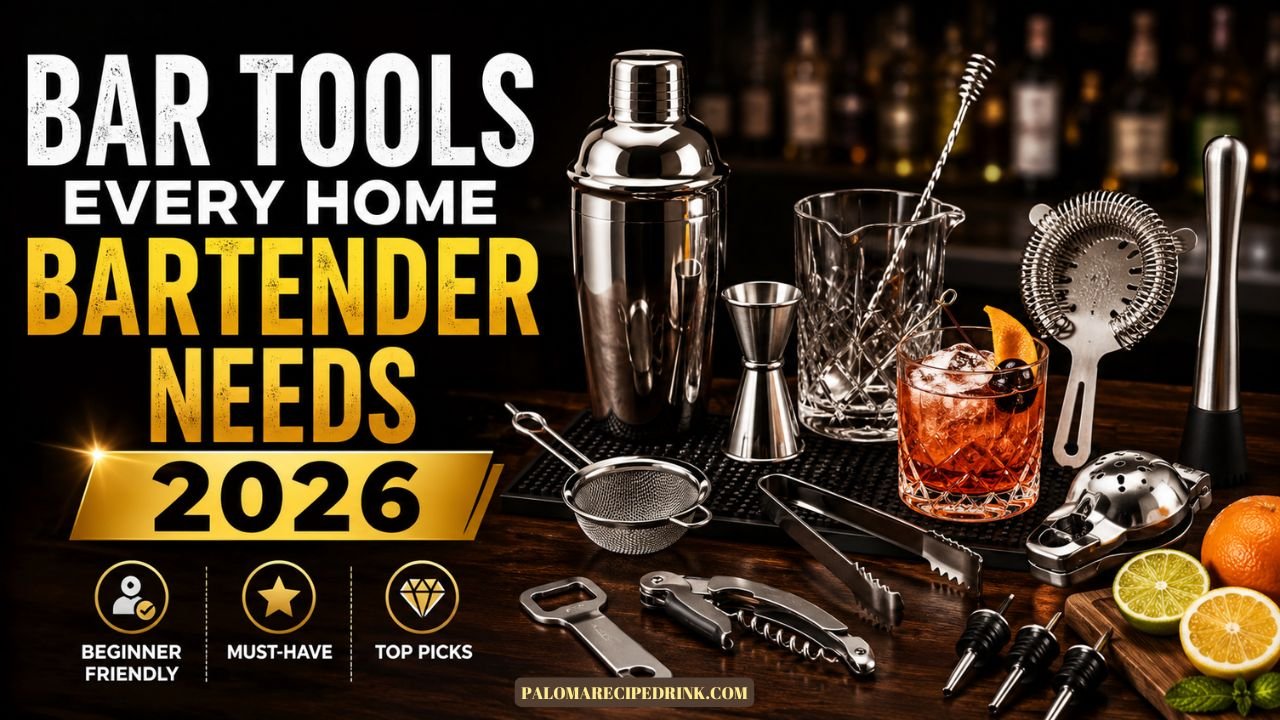
In fact, you can make an impressive number of classic drinks with a surprisingly small collection of tools. A shaker, jigger, strainer, bar spoon, and a decent glass or two will take you a long way.
The trick is knowing which bar tools are actually useful and which ones are mostly taking up space in a kitchen drawer.
I’ve found that the best home bar isn’t necessarily the one with the most equipment. It’s the one where everything has a purpose, is easy to reach, and makes preparing drinks feel simple rather than complicated.
If you’re starting from scratch, here’s the home bar equipment I’d prioritize.
The Essential Bar Tools for Beginners
If you only want the basics, start with these:
- Cocktail shaker
- Jigger
- Bar spoon
- Hawthorne strainer
- Mixing glass
- Citrus juicer
- Muddler
- Vegetable peeler or citrus peeler
- Ice
- A few versatile cocktail glasses
You don’t necessarily need to buy all of these on day one.
Start with the tools you’ll actually use for the drinks you enjoy making.
1. Cocktail Shaker
A cocktail shaker is probably the first piece of proper bar equipment I’d buy.
It’s essential for cocktails containing ingredients that need to be thoroughly combined, particularly drinks containing citrus juice, syrups, egg white, cream, or fruit.
Classic examples include:
- Margarita
- Daiquiri
- Whiskey Sour
- Cosmopolitan
- Lemon Drop
- Clover Club
- Espresso Martini
There are two main styles you’ll encounter at home: the Boston shaker and the cobbler shaker.
Boston shaker
A Boston shaker typically consists of two pieces that fit together.
It’s the style you’ll see frequently behind professional cocktail bars because it’s fast, durable, and relatively straightforward once you get comfortable with it.
Cobbler shaker
A cobbler shaker usually has three pieces: the shaker tin, a lid, and an integrated strainer.
It’s particularly beginner-friendly because everything is contained in one piece.
For someone just starting a home bar, I’d choose whichever feels more comfortable in your hand.
You don’t need an expensive shaker to make a good cocktail.
2. Jigger
If there’s one tool that can immediately improve your cocktails, it’s a jigger.
A jigger is a small measuring tool used to measure spirits, syrups, liqueurs, and other ingredients.
You might think experienced bartenders simply pour everything by eye, but accurate measurements are important when you’re trying to create a balanced drink.
Too much tequila can make a Margarita harsh.
Too much lime can make it aggressively sour.
Too much syrup can make it cloyingly sweet.
A jigger keeps those proportions under control.
What size jigger should you buy?
A double-sided jigger is an excellent choice for a home bar.
Many have a larger side around 1½ oz and a smaller side around ¾ oz, although exact measurements vary.
Look for one with clearly marked internal measurements if possible.
That makes it much easier to measure smaller quantities accurately.
3. Bar Spoon
A bar spoon is much longer and thinner than an ordinary teaspoon.
It’s designed for stirring cocktails smoothly and reaching the bottom of tall mixing glasses or highballs.
It’s useful for drinks such as:
- Old Fashioned
- Manhattan
- Negroni
- Martini
- Americano
- Spritzes
- Highballs
A good bar spoon also makes it easier to stir without aggressively disturbing the ice.
That’s important because stirring isn’t just about mixing ingredients. You’re also controlling dilution and temperature.
A cocktail stirred with ice for too long can become watery.
A cocktail barely stirred may remain too strong and warm.
A little practice makes a big difference.
4. Hawthorne Strainer
A Hawthorne strainer is the classic spring-loaded cocktail strainer.
It sits over the top of a shaker or mixing tin and prevents ice and larger pieces of fruit or herbs from entering your glass.
It’s especially useful when making shaken cocktails.
For example, after shaking a Margarita with ice, you can place the Hawthorne strainer over the shaker and pour the drink into your glass.
Some Hawthorne strainers have flexible springs and others have more rigid designs.
For home use, you don’t need anything complicated.
Choose one that fits securely over your shaker and feels comfortable to hold.
5. Fine Mesh Strainer
This is technically optional, but it’s one of those tools that becomes more useful the more cocktails you make.
A fine mesh strainer is used for what’s often called a double strain.
You pour the cocktail through your regular cocktail strainer while simultaneously passing it through the fine mesh strainer.
Why bother?
It catches tiny pieces of ice, citrus pulp, fruit, and herbs.
This can give cocktails a noticeably cleaner texture and appearance.
It’s particularly useful for drinks containing:
- Fresh citrus
- Muddled fruit
- Herbs
- Egg white
- Small pieces of ice
If you want your homemade cocktails to look polished, a fine mesh strainer is absolutely worth having.
6. Mixing Glass
Not every cocktail should be shaken.
Spirit-forward drinks such as an Old Fashioned, Manhattan, or Martini are generally stirred.
That’s where a mixing glass becomes useful.
A proper mixing glass is heavier and more stable than an ordinary drinking glass, making it easier to stir a cocktail with ice.
Add your ingredients, fill the glass with ice, stir with a bar spoon, and strain into your serving glass.
You don’t necessarily need a dedicated mixing glass when you’re starting out. A sturdy pint-style glass can work.
But once you make stirred cocktails regularly, a proper mixing glass is a nice upgrade.
7. Citrus Juicer
Fresh citrus is one of the easiest ways to improve a cocktail.
And once you’ve squeezed lemons and limes by hand for several drinks, you’ll understand why a citrus press is useful.
A handheld citrus squeezer makes it quick and easy to extract juice from:
- Lemons
- Limes
- Small oranges
Fresh juice is particularly important for drinks such as:
- Margaritas
- Daiquiris
- Whiskey Sours
- Gimlets
- Lemon Drops
- Palomas
You can squeeze citrus by hand, but a good press makes the process faster and less messy.
One important tip
Don’t juice an enormous batch and leave it sitting around for days.
Fresh citrus is best when it’s actually fresh.
For the best cocktail results, juice what you’re likely to use that day or within a short period.
8. Muddler
A muddler is used to gently crush ingredients inside a cocktail glass or shaker.
It’s particularly associated with drinks such as:
- Mojitos
- Mint Juleps
- Caipirinhas
- Fruit cocktails
The goal isn’t always to pulverize the ingredients.
In fact, with herbs like mint, aggressive muddling can release unpleasant bitter notes.
For a Mojito, for example, you’re generally trying to release aroma and flavor rather than completely destroy the leaves.
A simple, sturdy muddler is all you need.
9. Citrus Peeler or Vegetable Peeler
If you enjoy Old Fashioneds, Negronis, Martinis, or other aromatic cocktails, a good peeler is surprisingly useful.
You can use it to create long strips of:
- Orange peel
- Lemon peel
- Grapefruit peel
These can become elegant cocktail garnishes.
But citrus peel isn’t just about appearance.
When you express an orange or lemon peel over the surface of a drink, you release aromatic oils onto the cocktail.
That’s why an Old Fashioned with a freshly expressed orange peel smells so good before you even take the first sip.
A basic vegetable peeler is usually enough.
10. Ice: The Most Underrated Bar Tool
Technically, ice isn’t a tool.
But it might be the most important piece of your home bar.
Ice does three jobs:
It chills the drink.
It dilutes the drink.
It affects presentation.
And different cocktails benefit from different types of ice.
Large cubes
Great for spirit-forward drinks such as:
- Old Fashioneds
- Whiskey cocktails
- Negronis
Standard cubes
Useful for:
- Shaken cocktails
- Highballs
- Mixed drinks
Crushed ice
Excellent for:
- Mojitos
- Mint Juleps
- Frozen-style drinks
- Refreshing summer cocktails
You don’t need a commercial ice machine at home.
A good-quality freezer ice tray can be more than enough.
11. Cocktail Picks
Cocktail picks are inexpensive but useful for garnishes.
They’re perfect for holding:
- Olives
- Cherries
- Citrus pieces
- Small fruit
- Cocktail onions
They’re especially useful for Martinis and Old Fashioneds.
You can buy reusable metal picks or simple disposable wooden picks.
If you’re entertaining, I’d keep a small supply around.
12. Bar Mat
A bar mat isn’t necessary for making cocktails, but it can make your setup much easier to manage.
It catches:
- Small spills
- Drips
- Melted ice
- Citrus juice
It also gives your workspace a designated place for your shaker, jigger, bottles, and tools.
If you’re making cocktails regularly, it’s a worthwhile quality-of-life upgrade.
13. Bottle Opener and Corkscrew
These aren’t glamorous, but you will use them.
A home bar should have a reliable:
- Bottle opener
- Corkscrew
- Wine key
You’ll eventually encounter beer bottles, wine, sparkling wine, or bottles with different closures.
Having the right opener nearby is much better than searching through kitchen drawers halfway through making drinks.
14. Bar Towels
Keep a couple of clean towels near your home bar.
They are useful for:
- Drying tools
- Wiping spills
- Handling condensation
- Cleaning the workspace
- Keeping your hands dry
A clean bar looks better, but there’s also a practical reason to keep your tools and workspace dry.
Cocktail making can get surprisingly messy once you’re working with citrus, ice, syrups, and multiple bottles.
15. Cocktail Glassware
You don’t need every type of cocktail glass available.
Start with a few versatile styles.
Rocks glass
Also called an Old Fashioned glass.
Great for:
- Old Fashioned
- Negroni
- Whiskey cocktails
- Margaritas served over ice
Coupe glass
Useful for:
- Daiquiris
- Martinis
- Cosmopolitans
- Champagne cocktails
Highball glass
Excellent for:
- Palomas
- Mojitos
- Gin & Tonics
- Whiskey Highballs
- Rum & soda drinks
Wine or spritz glass
Useful for:
- Spritzes
- Large-format cocktails
- Sangria
You can build your collection gradually.
There’s no reason to buy twelve different styles of glassware when you’re only making three types of cocktails.
The Minimal Home Bar Setup
If you want to keep things simple, here’s the setup I’d recommend for a beginner:
Must-have:
- Cocktail shaker
- Jigger
- Bar spoon
- Hawthorne strainer
- Citrus juicer
- Citrus peeler
- Ice
- Rocks glasses
- Highball glasses
Very useful additions:
- Fine mesh strainer
- Mixing glass
- Muddler
- Cocktail picks
- Bar towels
Nice upgrades:
- Large clear ice molds
- Quality mixing glass
- Dedicated garnish tools
- Bar mat
- Specialty glassware
That is more than enough to make a surprisingly large range of cocktails.
What You Probably Don’t Need
This is where I think many new home bartenders waste money.
You don’t need:
- A huge 20-piece bartender kit
- A complicated electric cocktail machine
- Five different muddlers
- A separate tool for every garnish
- Expensive crystal glassware immediately
- Professional bar equipment before you’ve learned the basics
A lot of cocktail equipment is marketed as if you need a complete professional setup just to make a Margarita.
You don’t.
A good shaker + accurate jigger + reliable strainer + fresh citrus + good ice will take you much further than a drawer full of gadgets.
How to Build Your Home Bar in the Right Order
If I were starting from zero, I’d buy tools in this order:
Stage 1: The essentials
Start with:
- Shaker
- Jigger
- Strainer
- Bar spoon
- Citrus juicer
With those five tools, you can already make a huge number of cocktails.
Stage 2: Improve your technique
Add:
- Mixing glass
- Fine mesh strainer
- Muddler
- Citrus peeler
Now you can comfortably work with both shaken and stirred drinks.
Stage 3: Improve presentation
Then add:
- Cocktail picks
- Better glassware
- Large ice molds
- Bar mat
- Garnish tools
At this point, your home bar starts feeling much more complete.
How to Use Your Bar Tools Properly
Having the tools is only half the job.
The technique matters.
Shake cocktails containing citrus, juice, dairy, egg white, or other ingredients that need vigorous integration.
Stir spirit-forward cocktails when you want a silky texture and controlled dilution.
Measure your ingredients instead of guessing.
Strain when you want a clean, polished drink.
Use fresh citrus whenever the recipe depends on acidity.
Control your ice because temperature and dilution are part of the recipe.
These small habits will improve your cocktails more than buying increasingly expensive equipment.
A Simple Home Bartender’s Checklist
Before making a drink, I like to have everything ready:
☐ Cocktail glass
☐ Shaker or mixing glass
☐ Jigger
☐ Strainer
☐ Bar spoon
☐ Fresh ice
☐ Citrus
☐ Garnish
☐ Spirits and mixers
☐ Clean towel
This is essentially your home-bar mise en place.
Once everything is within reach, cocktail preparation becomes faster and much less chaotic.
Final Thoughts:-
Building a home bar isn’t about collecting every bartending gadget you can find.
It’s about having the right tools for the drinks you actually enjoy.
Start with a cocktail shaker, jigger, strainer, bar spoon, citrus juicer, and good ice. Add a mixing glass and fine mesh strainer when you start exploring stirred and more delicate cocktails.
Then slowly build your glassware and garnish tools around your favorite drinks.
A small, well-organized bar will always be more useful than a giant collection of equipment you never touch.
And if you’re wondering where to spend a little extra money, I’d put it into the things that directly affect the drink: a reliable jigger, a comfortable shaker, fresh citrus, and good ice.
You don’t need a professional bar to make a professional-looking cocktail.
You just need the right tools, a little practice, and a good recipe.
Leave a Reply