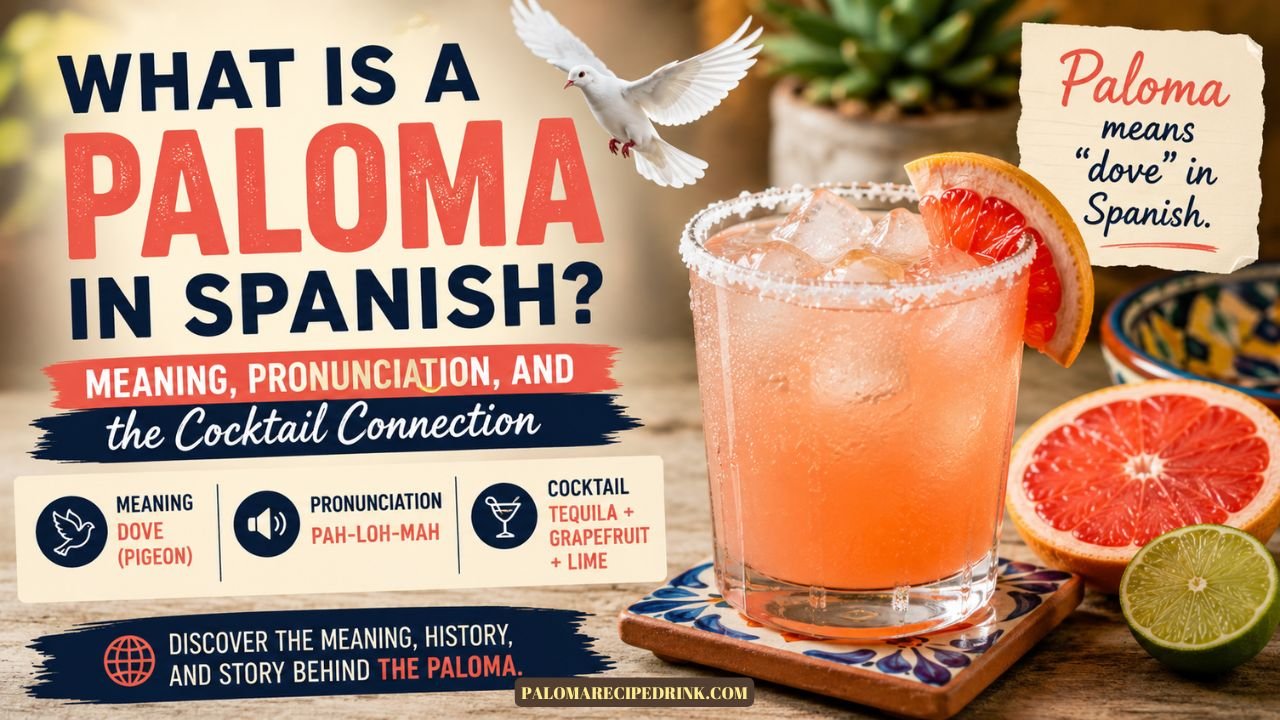
If you’ve ever ordered a Paloma at a Mexican restaurant or seen the cocktail on a bar menu, you may have wondered where the name comes from. What is a Paloma in Spanish? The answer is actually much simpler than the drink itself: paloma means “dove” in English and can also refer to a pigeon, depending on context.
But there’s more to the word than a simple translation. Paloma is a feminine Spanish noun, it’s used as a personal name, and it has become internationally associated with one of Mexico’s best-known tequila cocktails.
So, let’s look at what paloma really means, how to pronounce it, and why the word became the name of a famous drink.
What Does “Paloma” Mean in Spanish?
In standard Spanish, paloma translates most commonly to “dove” in English. Depending on the bird and the regional context, it can also be translated as “pigeon.” Spanish doesn’t always make the same distinction between dove and pigeon that English speakers commonly make.
The word is feminine, so you’ll often see it written as la paloma, meaning “the dove.”
For example:
- La paloma vuela. — The dove flies.
- Una paloma blanca. — A white dove.
- Vi una paloma en el parque. — I saw a dove/pigeon in the park.
The plural is palomas, meaning “doves” or “pigeons.”
How Do You Pronounce Paloma?
For English speakers, paloma is fairly easy to pronounce.
It’s roughly:
pah-LOH-mah
The Spanish pronunciation places the natural stress on the middle syllable: pa-LO-ma. It isn’t pronounced like the English word “pal” followed by “oma.”
The Spanish a is also more open and consistent than the English “a,” so the pronunciation sounds closer to “pah-loh-mah.”
What Does “La Paloma” Mean?
La paloma literally means “the dove.”
Doves have long been associated with ideas such as peace, love, gentleness, and freedom in many cultures. That’s one reason Paloma also works as a feminine given name in Spanish-speaking communities.
If you see the phrase “paloma blanca,” it means “white dove.”
There’s also a related masculine form, palomo, although the exact use can vary depending on context and region. When you’re talking about the Spanish word for dove or pigeon in general, paloma is the form most English learners are likely to encounter.
Why Is the Paloma Cocktail Called “Paloma”?
This is where the story gets more interesting.
The Paloma cocktail is a tequila-based drink strongly associated with Mexico. A traditional version combines tequila with grapefruit soda, often with lime and salt.
So why call a grapefruit-and-tequila cocktail “dove”?
The honest answer is that the exact origin of the cocktail’s name isn’t firmly established.
There are several theories about where the Paloma came from and why it received its name. The history of the drink is surprisingly difficult to trace, and even the frequently repeated story crediting a particular Mexican bartender has been disputed. Patrón’s history of the cocktail notes that the origins remain obscure and that the person sometimes credited with inventing it denied creating it.
That’s a useful reminder when reading cocktail history online: a story can be repeated for years without having enough evidence to make it a confirmed fact.
Is “Paloma” Related to Grapefruit?
You may also come across a theory connecting the cocktail’s name with grapefruit.
In Spanish, grapefruit is generally called toronja, so paloma doesn’t literally mean grapefruit. Some cocktail histories have suggested alternative explanations for the drink’s name, but there’s no universally accepted origin story.
That’s why I’d avoid saying that “Paloma means grapefruit” — it doesn’t.
Paloma means dove, while grapefruit is toronja.
What Is a Traditional Paloma Cocktail?
If you’re familiar with Margaritas, think of the Paloma as a different way to showcase tequila.
A classic-style Paloma is usually built around:
- Tequila
- Grapefruit soda
- Fresh lime juice
- Ice
- A little salt
- Lime or grapefruit garnish
Modern bartenders often make a fresher version using grapefruit juice and sparkling water instead of grapefruit soda. That gives the drink a more natural citrus flavor and lets the bartender control the sweetness.
The result is a cocktail that’s tart, citrusy, slightly bitter, lightly salty, and refreshing.
That’s part of why the Paloma has become such a popular tequila drink beyond Mexico. Contemporary cocktail menus often put their own spin on it, from fresh grapefruit versions to more elaborate creations.
Is Paloma a Common Spanish Name?
Yes. Paloma is also used as a feminine given name.
In that context, the name still carries the literal Spanish meaning associated with a dove. You’ll encounter Paloma as a personal name in Spain and throughout Spanish-speaking communities.
It’s also worth remembering that a word can have several layers of meaning. Someone named Paloma isn’t necessarily being referred to as “a pigeon” in everyday conversation; names often carry cultural, historical, or symbolic associations beyond their literal dictionary definitions.
Paloma vs. Margarita: Are They the Same?
Not quite.
Both are popular tequila cocktails, but their flavor profiles and ingredients are different.
A Margarita typically combines tequila, lime juice, and orange liqueur, while a Paloma is traditionally built around tequila and grapefruit flavors.
If you like bright, tart citrus with a slightly bitter edge, a Paloma may be your drink. If you prefer sharp lime and orange with a classic sweet-and-sour balance, a Margarita may suit you better.
Neither cocktail is automatically “healthy,” of course. The nutritional profile depends heavily on the recipe, serving size, sweeteners, and mixers.
Read also:-
- Tequila 101: Blanco vs Reposado vs Añejo – buying guide
- How Popular Is a Paloma? Exploring the Global Rise of Mexico’s Favorite Cocktail
Frequently Asked Questions About “Paloma” in Spanish
Does Paloma mean dove in Spanish?
Yes. Paloma most commonly means “dove” and can also refer to a pigeon depending on context.
What does “la paloma” mean?
La paloma literally translates to “the dove.” “La” is the feminine singular definite article, while “paloma” is the noun.
How do you say Paloma in Spanish?
It’s pronounced approximately pah-LOH-mah, with the stress on the middle syllable.
Why is the tequila drink called a Paloma?
The cocktail’s exact naming history isn’t certain. The drink is strongly associated with Mexico, but the precise origin of both the cocktail and its name remains debated.
Final Takeaway:-
So, what is a Paloma in Spanish? Simply put, paloma means “dove” and can also be used for “pigeon” depending on context.
The cocktail connection makes the word especially interesting. A Paloma isn’t named because paloma means grapefruit — it doesn’t. The drink’s exact naming story is less certain, but its identity as a refreshing Mexican tequila cocktail is well established.
And if you’re ordering one at a bar, now you know exactly what you’re saying: “Paloma” means dove, pronounced pah-LOH-mah.
Leave a Reply